Michigan State University

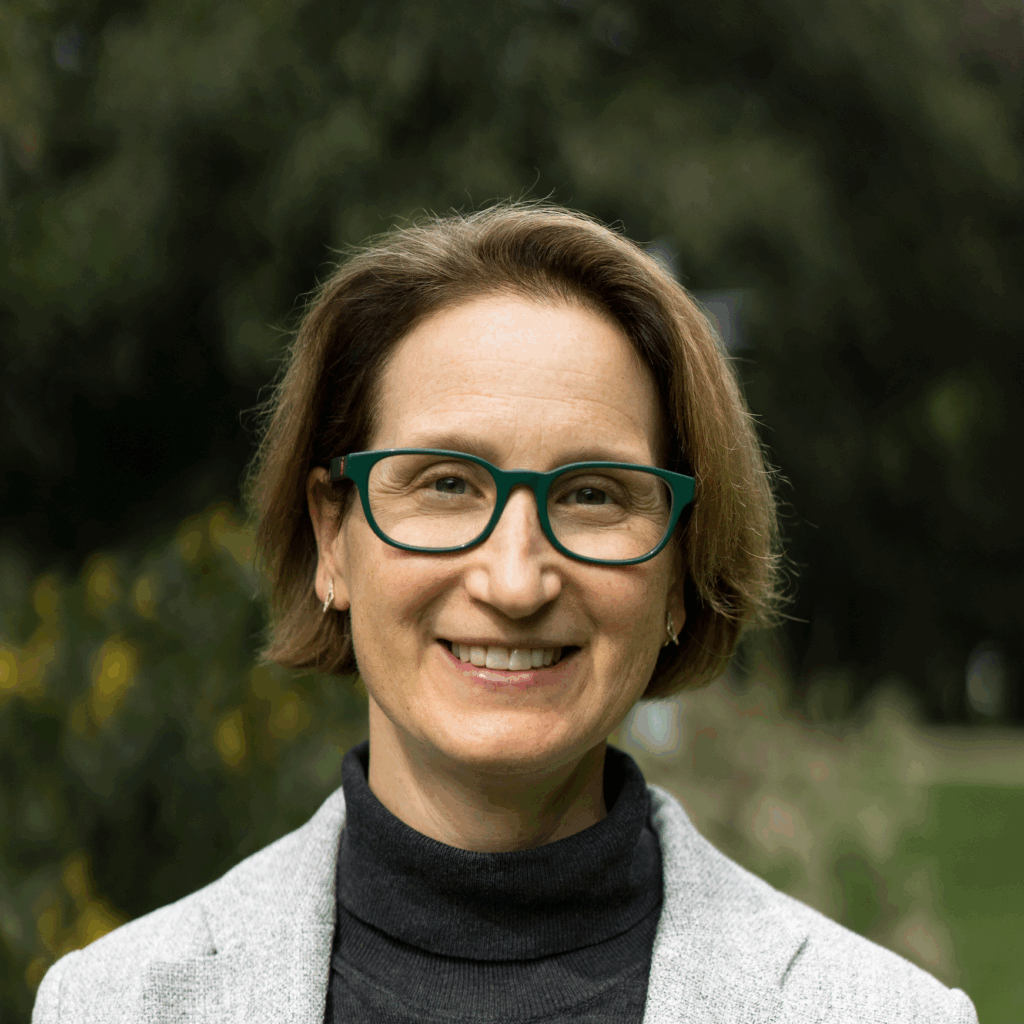
Paula Winke

Biography

(Ph.D, Georgetown University) Paula Winke is the Inaugural Arts & Letters Professor in the College of Arts & Letters. She teaches in the Second Language Studies Ph.D. Program and in the TESOL & Applied Linguistics Programs in the Department of Linguistics, Languages, and Cultures. She also teaches in the MSU College of Education’s K-12, English as a second language (ESL) teacher-training program. Her primary research is on second language assessment and individual differences that affect language assessment processes and outcomes. Paula formerly served on a National Academies of Science, Engineering, and Medicine consensus committee to advise on the design of federal language proficiency exams. She is currently an advisor to the British Council in the United Kingdom on the re-design of the International English Language Testing System (IELTS) exam.

Works


  • Opitz, A., Berulava, H.-G., Winke, P., & Bordag, D. (2026). Welche Informationen speichern wir beim Lesen? Zur unterschiedlichen Rolle von Form und Bedeutung in L1 und L2. [What information do we retain during reading? The different role of form and meaning in L1 and L2.] Deutsch als Fremdsprache, 63 (1), 2-14. https://doi.org/10.37307/j.2198-2430.2026.01.03
  • Akiding, M., & Winke, P. (2025). L2 motivation, anxiety, and intended effort among learners of African languages in the United States. Foreign Language Annals, 58(4), 847-868. https://doi.org/10.1111/flan.70033
  • Koné, K., Winke, P., & Gordon, M. (2025). “We would like to see ourselves in the test:” The experiences of francophone African English learners in high-stakes English proficiency testing. Studies in Language Assessment, 14 (1), 115-150. https://doi.org/10.58379/NKXR9151
  • Wahab, A., & Winke, P. (2025). Enhancing vocabulary acquisition through song metaphors: An exploratory study in a novice-high/intermediate-low Hindi classroom. Journal of the National Council of Less Commonly Taught Languages, 39, 1-58. https://ncolctl.org/wp-content/uploads/2026/03/JNCOLCTL-Vol-39-Paper-1_.pdf
  • Burton, J. D., & Winke, P. (2025). Affect as a component of second language speech perception. Studies in Second Language Acquisition. Advance online publication. 1-26. https://doi.org/10.1017/S0272263125000063
  • Winke, P., & Koné, K. (2025). Why we need more research on technology applications in less-commonly-taught-language (LCTL) programs. Language Learning & Technology, 29(2). 1-10. https://doi.org/10125/73608
  • Etchart, M., & Winke, P. (2024). Reexamining the “L2 Grit Scale” construction process: A conceptual replication of Teimouri, Plonsky, and Tabandeh (2022). Journal for the Psychology of Language Learning, 6(2), Article e6216324. https://doi.org/10.52598/jpll/6/2/1
  • Zhang, X., & Winke, P. (2024). Time to proficiency in young English learners and factors that affect progress. TESOL Quarterly. Advance online publication. https://doi.org/10.1002/tesq.3340
  • Koné, K., & Winke, P. (2023). Do directed motivational current phenomena exist everywhere? An investigation into African EFL learners’ experiences. English Language Teaching, 16(4), 1-14.  https://doi.org/10.5539/elt.v16n4p1
  • Siddoqui, T., & Winke, P. (2023). Bangladeshi EAP teachers’ perspectives on Task-based Language Teaching. TASK, 3(2), 273-304. https://doi.org/10.1075/task.00023.sid
  • Winke, P., Zhang, X., & Pierce, S. J. (2023). A closer look at a marginalized test method: Self-assessment as a measure of speaking proficiency. Studies in Second Language Acquisition, 45(2), 416-441. https://doi.org/10.1017/S0272263122000079
  • Winke, P., Huntley, L., & Gass, S. (2022). “So I think دبة is bear!” An initial data-driven explanation of how Arabic students use captioned video to learn vocabulary. Arab Journal of Applied Linguistics, 7(2), 1–34. https://mail.arjals.com/ajal/article/view/362
  • Winke, P., & Brunfaut, T. (Eds.) (2021). The Routledge handbook of second language acquisition and language testing. Routledge. ISBN: 9781138490680
  • Burton, J. D., & Winke, P. (2021). Building positive outcomes for English language learning: A case for focusing on positive individual differences. TESOL International Association AL Forum. http://newsmanager.commpartners.com/tesolalis/issues/2021-02-09/3.html
  • Gass, S., Sydorenko, T., & Winke, P. (2021). Materials from “The effects of captioning videos used for foreign language listening activities,” published in Language Learning & Technology, 2010, by Winke, Gass, and Sydorenko [Materials and description]. Humanities Commons. http://doi.org/10.17613/dtyy-3k03
  • Winke, P., Heidrich, E., & Gass, S. (2021). Individual differences in Advanced Spanish proficiency: Cluster and case-matching analyses on 127 Advanced learners. In M. Menke & P. Malovrh (Eds.), Advancedness in second language Spanish: Definitions, challenges, and possibilities (pp. 368-395). John Benjamins.
  • Godfroid, A., Winke, P., & Conklin, K. (2020). Exploring the depths of second language processing with eye tracking: An introduction. Second Language Research, 36(3), 243-255. https://doi.org/10.1177/0267658320922578
    National Academies of Sciences, Engineering, and Medicine. (2020). A principled approach to language assessment. Washington, DC: The National Academies Press. https://doi.org/10.17226/25748
  • Winke, P., Zhang, X., Rubio, F., Gass, S., Soneson, D., & Hacking, J. (2020). The proficiency profiles of language students: Implications for programs. Second Language Research & Practice, 1(1), 25-64. http://hdl.handle.net/10125/69840
  • Zhang, X., Winke, P., & Clark, S. (2020). Background characteristics and oral proficiency development over time in lower-division college foreign language programs. Language Learning, 70(3), 807-847. https://doi.org/10.1111/lang.12396
  • Winke, P., & Ma, W. M. (2020). The assessment of Chinese L2 proficiency. In C. Shei, M., Zikpi, & D. Chao (Eds.), The Routledge handbook of Chinese language teaching (pp. 405-422). Routledge.
  • Winke, P. & Zhang, X. (2019). How a third-grade reading retention law will affect ELLs in Michigan, and a call for research on child ELL reading development. TESOL Quarterly, 53(2), 529-542. https://doi.org/10.1002/tesq.481 Video abstract: https://youtu.be/Xp1JXuiWZDY
  • Gass, S., Van Gorp, K., & Winke, P. (2019). Using different carrots: How incentivization affects proficiency testing outcomes. Foreign Language Annals, 52(2), 216-236. https://doi.org/10.1111/flan.12389 Video abstract: https://youtu.be/Br3Ct919IK8
  • Ma, W., & Winke, P. (2019). Self-assessment: How reliable is it in assessing oral proficiency over time? Foreign Language Annals, 52(1), 66-86. https://doi.org/10.1111/flan.12379 Video abstract: https://youtu.be/QhxEQOl_dcU
  • Rasool, G., & Winke, P. (2019). Undergraduate students’ motivation to learn and attitudes towards English in multilingual Pakistan: A look at shifts in English as a world language. System, 82, 50-62. https://doi.org/10.1016/j.system.2019.02.015
  • Winke, P., & Gass, S. (Eds.) (2018). Foreign language proficiency in higher education: Curricular and assessment issues. Springer. https://doi.org/10.1007/978-3-030-01006-5
  • Winke, P., Lee, S., Yoon, H-J., Ahn, J. I., Choi, I., & Cui, Y. (2018). The cognitive validity of child English-language tests: What young language learners and their native-speaking peers can reveal. TESOL Quarterly, 52(2), 274-303. https://doi.org/10.1002/tesq.396 Video abstract: https://youtu.be/GY0dRCTRtIk
  • Lee, S., & Winke, P. (2018). Young learners’ response processes when taking computerized tasks for speaking assessment. Language Testing, 35(2), 239-269. https://doi.org/10.1177/0265532217704009
College of Arts & Letters News
Notice of Nondiscrimination | Privacy Statement | Site Accessibility
SPARTANS WILL | © Michigan State University