Michigan State University

Jon Keune

Biography

Jon Keune (pronounced koi-nee) is a scholar of religion, social history, and transregionalism in Asia. He works especially in western India, Taiwan, and Japan, with varying levels of proficiency in Marathi, German, Sanskrit, Mandarin Chinese, and Japanese. Drawing on this research in and about Asia, he also explores how nonprofit organizations operate across religious and nonreligious boundaries to contribute to civil society and the social good. In his teaching at MSU and public speaking among nonprofit, civic, and religious organizations in the USA and abroad, he shows how the study of religion and society help develop intercultural competence to interact and work with a wide variety of people.

His current research traces the legacies of B.R. Ambedkar’s conversion to Buddhism in 1956 as they play out among his followers within India and beyond. This community-engaged scholarship documents what Buddhism means and does for Ambedkarite professionals as they migrate internationally and interact with other forms of Buddhism. Learning about how Ambedkarites navigate cross-cultural environments helps us understand the changing nature of religion, spirituality, and cultural identification today.

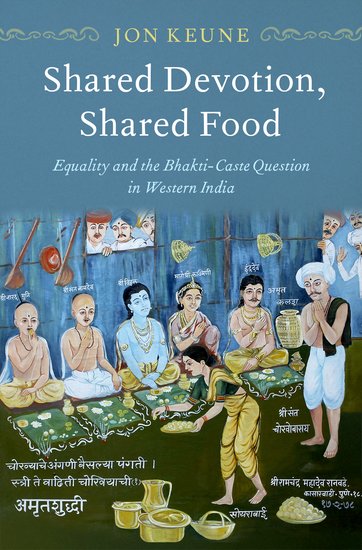
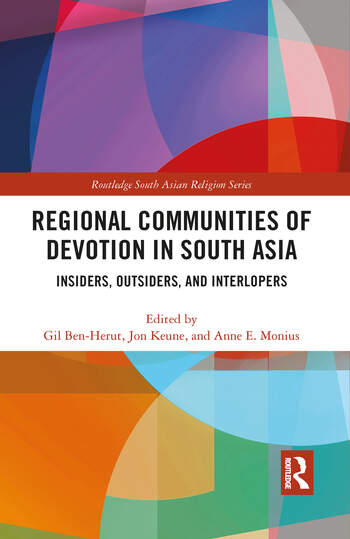
Keune’s earlier scholarship focused on popular, devotional (bhakti) Hindu movements and their relationships to caste, especially the Varkari tradition and its hagiographical literature in Marathi between 1600 and the present. His book Shared Devotion, Shared Food: Equality and the Bhakti-Caste Question in Western India explored how the idea of social equality became normative for analyzing bhakti traditions’ social effects, displacing earlier nondualist and theological terms that Marathi authors used to speak about caste and bhakti.  He co-edited Regional Communities of Devotion in South Asia: Insiders, Outsiders, and Interlopers and has published articles in journals, edited books, and encyclopedias on bhakti, Marathi literature, and comparative and transregional studies.

Keune’s work has been supported by three Fulbright fellowships, the American Institute of Indian Studies, the AAS Northeast Asia Council, the American Library Association, postdoctoral fellowships in Göttingen and Houston, and other grants. He has been a visiting research fellow at the Max-Weber-Kolleg in the University of Erfurt, Oxford University, University of Tokyo, National Taiwan University, and Academia Sinica. In 2013, he co-founded the Regional Bhakti Scholars Network to bring together scholars of diverse regions and languages to study bhakti in new ways through annual symposia, publications, and the Bhakti Virtual Archive (BHAVA) — a grant-supported digital humanities project with over two dozen collaborators.

Education

  • PhD, Columbia University, 2011
  • MDiv, Princeton Theological Seminary, 2002
  • BA, St. Olaf College, 1997

Scholarly Interests: cross-cultural translation, transregionalism, comparative studies, social history and historiography, nonprofits and civil society, equality studies, food, hagiology and hagiography, Ambedkarite Buddhists, transnational Buddhism, bhakti traditions, Dalit and subaltern movements, early modern Marathi literature

Works

Books

  • Shared Devotion, Shared Food: Equality and the Bhakti-Caste Question in Western India  (New York: Oxford University Press, 2021)
  • Regional Communities of Devotion in South Asia: Insiders, Outsiders and Interlopers, co-edited with Gil Ben-Herut and Anne Monius  (New York: Routledge, 2019)

Journal Articles

  • “Comparative vs. Hagiology: Two Variant Approaches to the Field” in Religions (2019) 10:10/575,  https://www.mdpi.com/2077-1444/10/10/575
  • “Pedagogical Otherness: On the Use of Muslims and Untouchables in Some Hindu Devotional Literature” in Journal of the American Academy of Religion (2016) 84:3, 727-749
  • “Emphatically Ignoring the Neighbours: the Selective Geographic Orientation of Marathi Bhaktiin Journal of Hindu Studies (2015) 8:3, 296-314
  • “Eknāth in Context: the Literary, Social, and Political Milieus of an Early Modern Poet” in South Asian History and Culture (2015) 6:1, 70-86
  • “Bhārat āṇi Dharmaviṣayak Abhyās” (“India and the Academic Study of Religion” in Marathi) in Pratiṣṭhan (2010) 58:1, 32-39
  • “Gathering the Bhaktas in Marāṭhī” in Journal of Vaishnava Studies (2007) 15:2, 169-188
  • “The Inter- and Intra-Religious Conversions of Nehemiah Nilakantha Goreh” in Journal of Hindu-Christian Studies (2004) 17:1, 45-54

Book Chapters

  • “Nagpur as a Buddhist Urban Centre,” in Handbook of Religion and Urbanity and Religion and Urbanity Online. eds. Jörg Rüpke and Susanne Rau (Berlin: DeGruyter) Forthcoming
  • “Bhakti” in Cambridge History of Indian Literature, eds. Francesca Orsini and Whitney Cox (Cambridge: Cambridge University Press) Forthcoming
  • “Non-duality and Social Ethics in Popular Practice: Devotional Hindu Cases in the Varkari Tradition of Western India,” in Bloomsbury Handbook on Non-duality, eds. Jonathan Duquette and James Madaio, (London: Bloomsbury Academic) Forthcoming
  • “The Challenge of the Swappable Other: A Framework for Interpreting Otherness in Bhakti Texts,” in Regional Communities of Devotion in South Asia. (New York: Routledge, 2019), 101-121.
  • “Nāth Caritrāñce Saṁśodhan,” (“Research on Eknāth Biographies” in Marathi), in Santsāhitya  Mīmāṃsā (Investigations into Saint Literature, Festschrift for Dr. Satish Badwe. Ed. Tāher Paṭhān and N. B. Kadam. (Śrīrāmpūr, India: Śabdālay Prakāśan, 2017), 197-218.
  • “Conditions for Historicising Religion: Hindu Saints, Social Change, and Regional Identity in Western India (ca. 1600-1900)” in History and Religion. Ed. Bernd-Christian Otto, Jörg Rüpke, and Susanne Rau. (Berlin: de Gruyter, 2015), 227-239.
  • “Matthias Christian Sprengel’s Writings on India: A ‘Disenchanted’ and Forgotten German Orientalism at the End of the 18th Century,” in Deploying Orientalism.  Ed.  James Hodkinson. (Rochester NY: Camden House, 2013), 117-134.
  • “Varkaris in Rural Western India” in Contemporary Hinduism. Ed. P. Pratap Kumar.  (Durham: Acumen Publishing, 2013), 148-161.

Encyclopedia entries & Reference work

  •  “Comprehensive Bibliography of Publications by Eleanor Zelliot.”  Knowledge Commons (2026) https://works.hcommons.org/records/ftypj-7m765
  • “Hindu Devotionalism: Eknath of Paithan” in “Holy Persons” section of Encyclopedia of the Global Middle Ages. Ed. Massimo Rondolino & Aaron Hollander. (London: Bloomsbury/ARC Humanities Press, 2022).  DOI: 10.5040/9781350990005.119.
  • “Eknāth” In Oxford Bibliographies in Hinduism.  Ed. Tracy Coleman. (2019) http://www.oxfordbibliographies.com/browse?module_0=obo-9780195399318
  • “Eknāth” in Encyclopedia of Hinduism.  Ed. Knut Jacobsen. Vol. 4.  (Leiden: Brill, 2012), 218-226.
  • “Jñāndev” co-authored with Christian Novetzke, in Encyclopedia of Hinduism.  Ed. Knut Jacobsen. Vol. 4.  (Leiden: Brill, 2012), 258-264.
  • “Vārkarī sampradāy,” co-authored with Christian Novetzke, in Encyclopedia of Hinduism.  Ed. Knut Jacobsen. Vol. 3. (Leiden: Brill, 2011), 617-626.
Gallery
Videos
College of Arts & Letters News
Notice of Nondiscrimination | Privacy Statement | Site Accessibility
SPARTANS WILL | © Michigan State University